Let’s be honest for a second.
African creativity is everywhere right now.
You hear it in the music.
You see it in fashion.
You feel it in how the world is starting to “discover” things that have always been here.
It looks like a win.
And in many ways, it is.
But there’s something slightly off when you sit with it long enough.
Because the question isn’t whether Africa is creative.
The question is…
who is actually cashing in on that creativity?
And that’s where the conversation gets uncomfortable.
Because a lot of the time, the creativity moves—but the value doesn’t stay.
A song blows up globally, but ownership is split in ways that don’t favor the creator.
A design trend rooted in African culture gets picked up, repackaged, and sold—somewhere else.
Stories travel, ideas spread, aesthetics evolve… but the systems behind them? Still catching up.
That’s the gap.
Not talent.
Not ideas.
Systems.
A real creative economy isn’t just people creating.
It’s people owning, protecting, and scaling what they create.
Right now, Africa has the first part locked in.
The second part? Still building.
And that’s why you’ll keep seeing the same pattern:
Things go viral.
People celebrate.
The world pays attention.
Then quietly, the structure underneath decides who actually benefits.
No contracts? Someone else controls distribution.
No registration? Ownership becomes blurry.
No cross-border systems? Growth hits a ceiling.
So even when the creative economy is “booming”…
it’s not fully working the way it should.
And here’s the part that needs to be said clearly:
Africa does not need to prove it can create.
That argument is finished.
What matters now is whether Africa can hold on to what it creates.
That means: Making it easy to register work.
Making rights enforceable.
Making sure something created in Nairobi, Lagos, or Accra doesn’t lose its ownership the moment it crosses a border.
Because without that, the creative economy becomes a pipeline.
Things flow out.
Value gets extracted.
And the cycle repeats.
But once systems enter the picture, everything changes.
Now creativity doesn’t just move—it accumulates.
It builds institutions.
It feeds back into the people creating it.
That’s when you stop talking about “talent”…
…and start talking about power.
This is where platforms like MfalmeBits come in—not as content hubs, but as structure.
Because archiving knowledge is one thing.
Making it accessible is another.
But organizing it in a way that protects it, licenses it, and allows it to scale?
That’s how you start shaping a real creative economy.
So yes—African creativity is winning attention right now.
But attention was never the goal.
Ownership is.
And the sooner the creative economy is built around that idea, the sooner things stop slipping through the cracks.
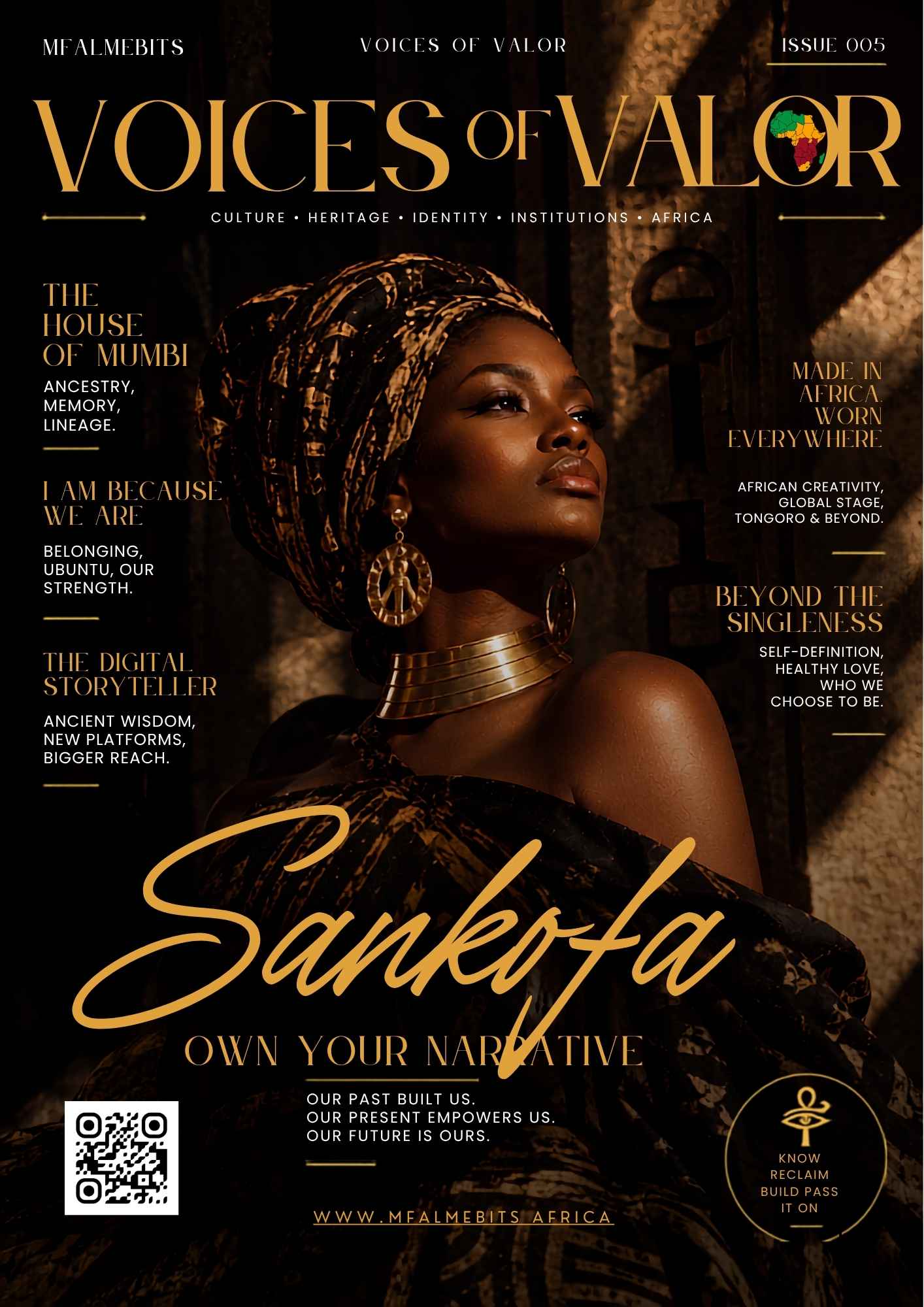
Own Your Narrative.
Creative Economy
Everyone Is Making Money From African Creativity — Except Africans

Africa is not short on creativity. It is building the systems to own it.
Comments
1
Leave a Comment
May 01, 2026
Nice piece