Walk through any African city and you'll witness a contradiction that has become so familiar we rarely stop to question it.
The phones in our hands are designed elsewhere. The software powering our businesses is largely owned elsewhere. The minerals beneath our soil fuel industries elsewhere before returning to us as finished products. Even some of the conversations about Africa's future are often framed through institutions beyond our borders.
Yet this is one of the richest continents on Earth.
Not only in minerals.
Not only in land.
Not only in culture.
But in people.
So why does dependency still feel normal?
Perhaps because we have mistaken political independence for African sovereignty.
The two are not the same.
A nation can raise its own flag while depending on others to define its education, finance its development, process its resources, preserve its history, and build its digital future.
That is independence.
Sovereignty asks a deeper question.
Who truly shapes our future?
For decades, discussions about Africa's progress have understandably focused on the legacy of colonialism. Its effects remain visible in borders, institutions, economies, and global power structures. Acknowledging that history is necessary.
But history alone cannot become our entire strategy.
The uncomfortable truth is that every generation eventually inherits two responsibilities.
To understand the systems it received.
And to build the systems it deserves.
That is where the conversation about African sovereignty must evolve.
Because sovereignty is no longer measured only at border posts or presidential inaugurations.
It is measured inside classrooms.
Inside research laboratories.
Inside data centres.
Inside universities.
Inside cultural institutions.
Inside businesses.
Inside the stories we choose to tell ourselves.
Economic sovereignty begins with a simple question.
Who creates the greatest value from African resources?
The continent exports raw materials worth billions, yet many of the highest-value products are manufactured elsewhere before returning to African markets.
This is not simply an economic issue.
It is an institutional one.
Value follows capability.
Capability follows investment.
Investment follows long-term thinking.
The African Continental Free Trade Area (AfCFTA) offers one of the most significant opportunities in modern African history—not merely because it reduces trade barriers, but because it invites African countries to build value chains with one another instead of exporting opportunity abroad.
The future of African trade cannot only be about moving goods.
It must also be about creating them.
Education presents another question we rarely ask.
Who decides what an African child should know before graduating?
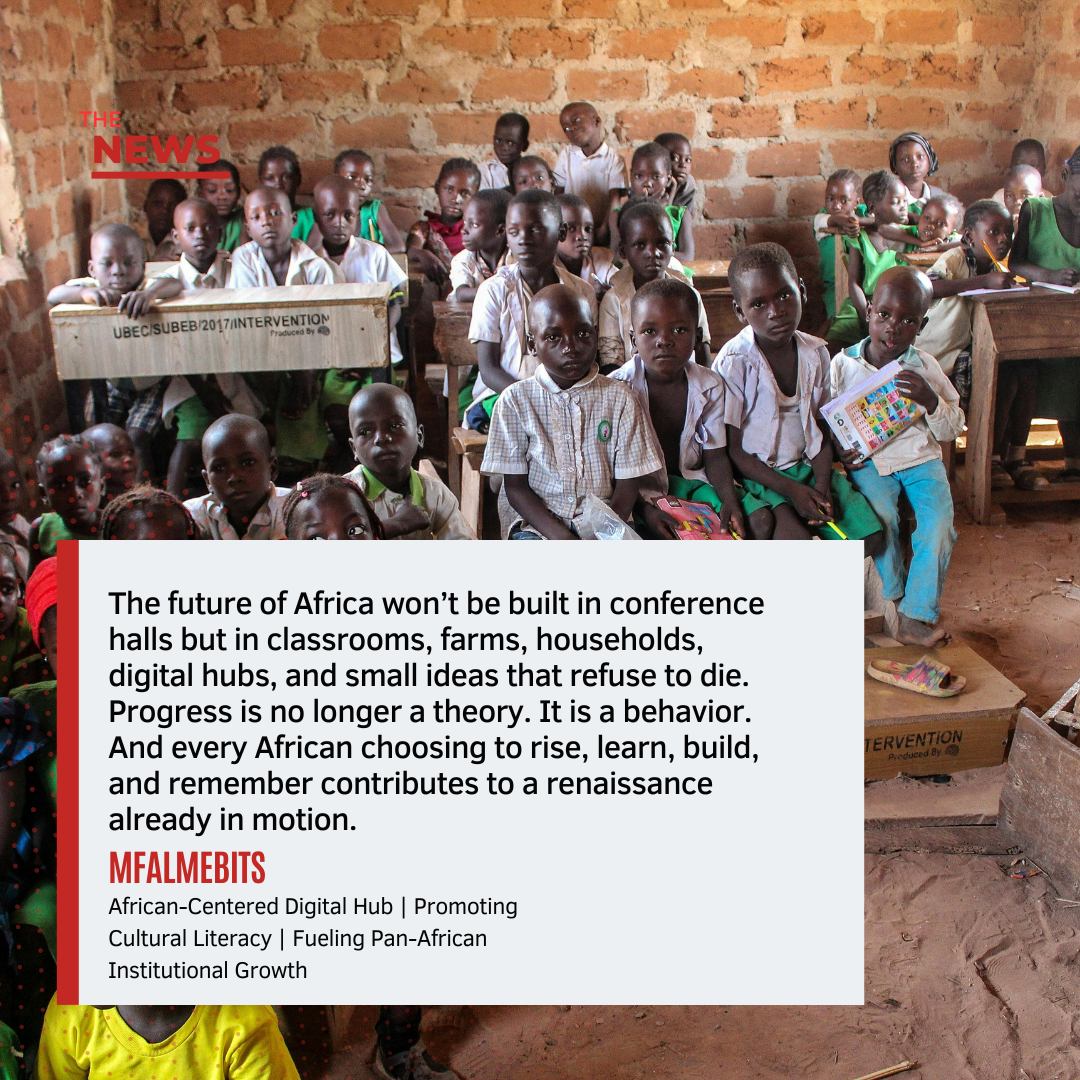
Across the continent, millions of young people leave educational institutions carrying qualifications but questioning their place in rapidly changing societies.
Employment matters.
Skills matter.
But education was never meant to produce workers alone.
It should cultivate citizens.
Stewards.
Builders.
Institutional leaders.
A future-ready Africa requires educational systems that teach critical thinking alongside cultural literacy.
A student who understands artificial intelligence but has no understanding of Africa's intellectual traditions has received only part of an education.
Likewise, preserving culture without preparing young Africans to compete globally creates another imbalance.
The future belongs to societies capable of doing both.
Digital transformation presents an equally important challenge.
Every search, transaction, dataset, and digital interaction contributes to a growing global economy powered by information.
Who owns African data?
Who develops African artificial intelligence?
Who preserves African languages in digital spaces?
Who ensures African knowledge remains accessible in the age of algorithms?
These questions are no longer technological.
They are questions of African sovereignty.
A continent that depends entirely on external digital infrastructure risks outsourcing more than technology.
It risks outsourcing memory.
Culture.
Knowledge.
Influence.
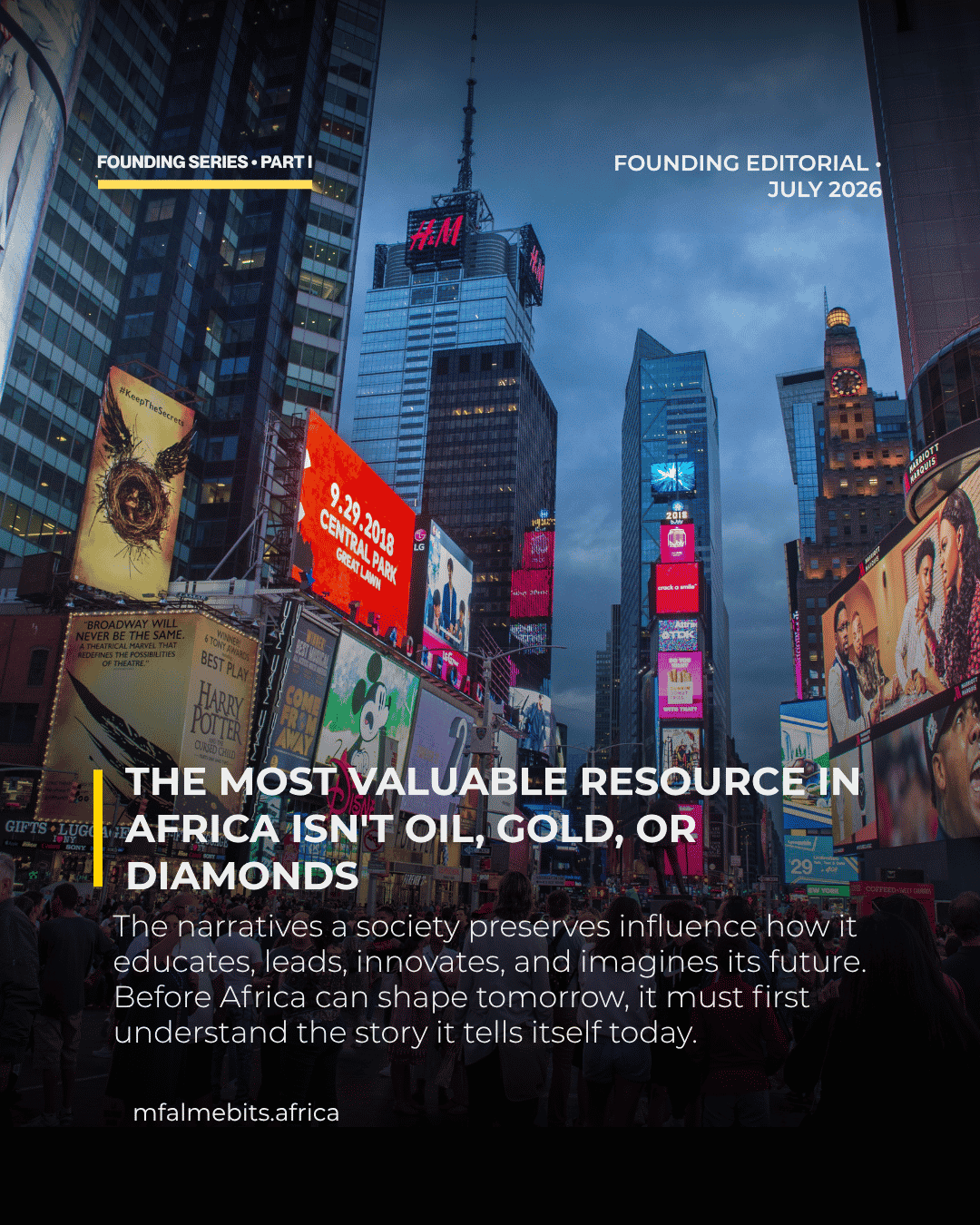
Narratives have always been strategic assets.
Long before maps were drawn, stories shaped civilizations.
They determined who belonged.
What mattered.
What deserved preservation.
Today, narratives continue shaping investment decisions, educational priorities, international perceptions, and even how Africans understand themselves.
That is why narrative sovereignty matters.
If others consistently define Africa's past, they will eventually influence how Africa imagines its future.
Owning our narrative is not about rejecting global perspectives.
It is about accepting responsibility for contributing our own.
It means documenting our histories before they disappear.
Celebrating our innovations before others claim them.
Protecting our languages before silence replaces them.
Building confidence rooted in knowledge rather than nostalgia.
Strong narratives require strong institutions.
Not personalities.
Institutions preserve memory after speeches end.
They protect research after governments change.
They educate generations long after founders are gone.
A continent cannot build lasting sovereignty through charismatic individuals alone.
It requires universities that produce original African scholarship.
Museums that preserve African heritage.
Think tanks that influence African policy.
Digital platforms that protect African knowledge.
Educational institutions confident enough to teach Africa not as an appendix to global history, but as an essential contributor to it.
Fortunately, the future is already offering opportunities.
Across the continent, entrepreneurs are building technologies designed for African realities.
Researchers are collaborating across borders.
Universities are expanding partnerships.
Creative industries are reshaping how the world experiences African culture.
The movement toward cultural restitution continues gaining international attention.
Young Africans are using digital platforms to preserve indigenous languages, archive oral histories, and share knowledge beyond traditional institutions.
These are not isolated successes.
They are early signs of a continent becoming more intentional about its future.
Neo-Pan-Africanism in the twenty-first century is therefore less about repeating historical slogans and more about designing systems that endure.
It asks us to think continentally while acting institutionally.
To see AfCFTA not merely as a trade agreement but as a framework for shared prosperity.
To invest in African research ecosystems capable of solving African problems.
To strengthen educational partnerships that circulate knowledge across borders instead of allowing talent to leave permanently.
To preserve digital heritage with the same urgency previous generations preserved physical heritage.
To build institutions strong enough that future generations inherit confidence instead of dependency.
Because sovereignty is not an event.
It is a continuous practice.
It is exercised every time an African institution produces knowledge instead of importing it.
Every time value is created before resources are exported.
Every time technology reflects African realities.
Every time culture becomes a foundation for innovation rather than a museum exhibit.
Every time an African child grows up believing they are not merely inheriting history—but participating in its next chapter.
Africa's greatest opportunity is no longer proving its potential.
The world has heard that promise for generations.
The challenge now is demonstrating what becomes possible when a continent begins trusting its own ideas, strengthening its own institutions, educating its own people with confidence, and designing systems worthy of its future.
A continent does not become sovereign simply because it governs itself.
It becomes sovereign when it possesses the confidence, institutions, knowledge, and courage to define its own future.
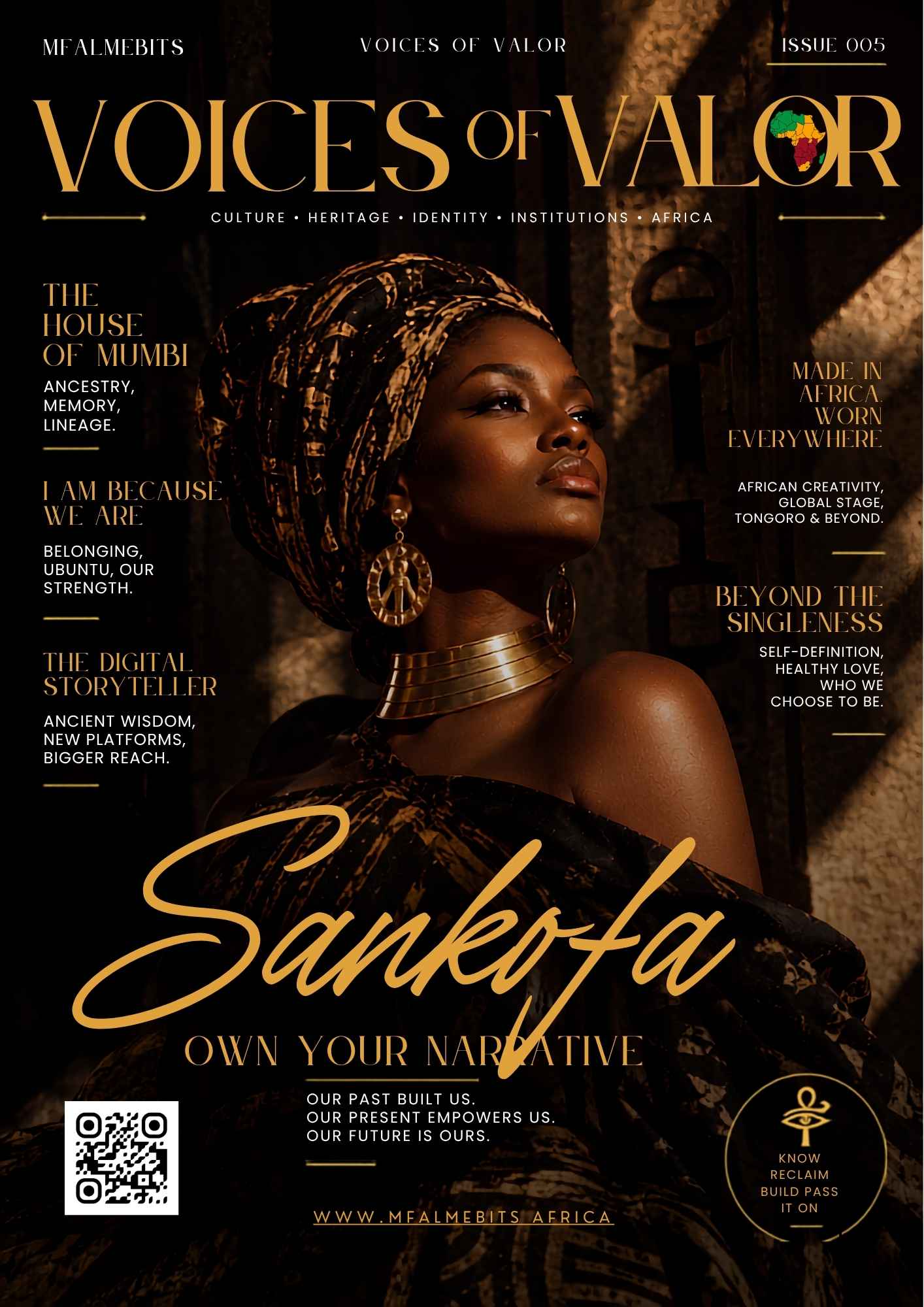
Own Your Narrative.
Cultural Sovereignty
Africa Is Rich. So Why Does It Still Feel Dependent?
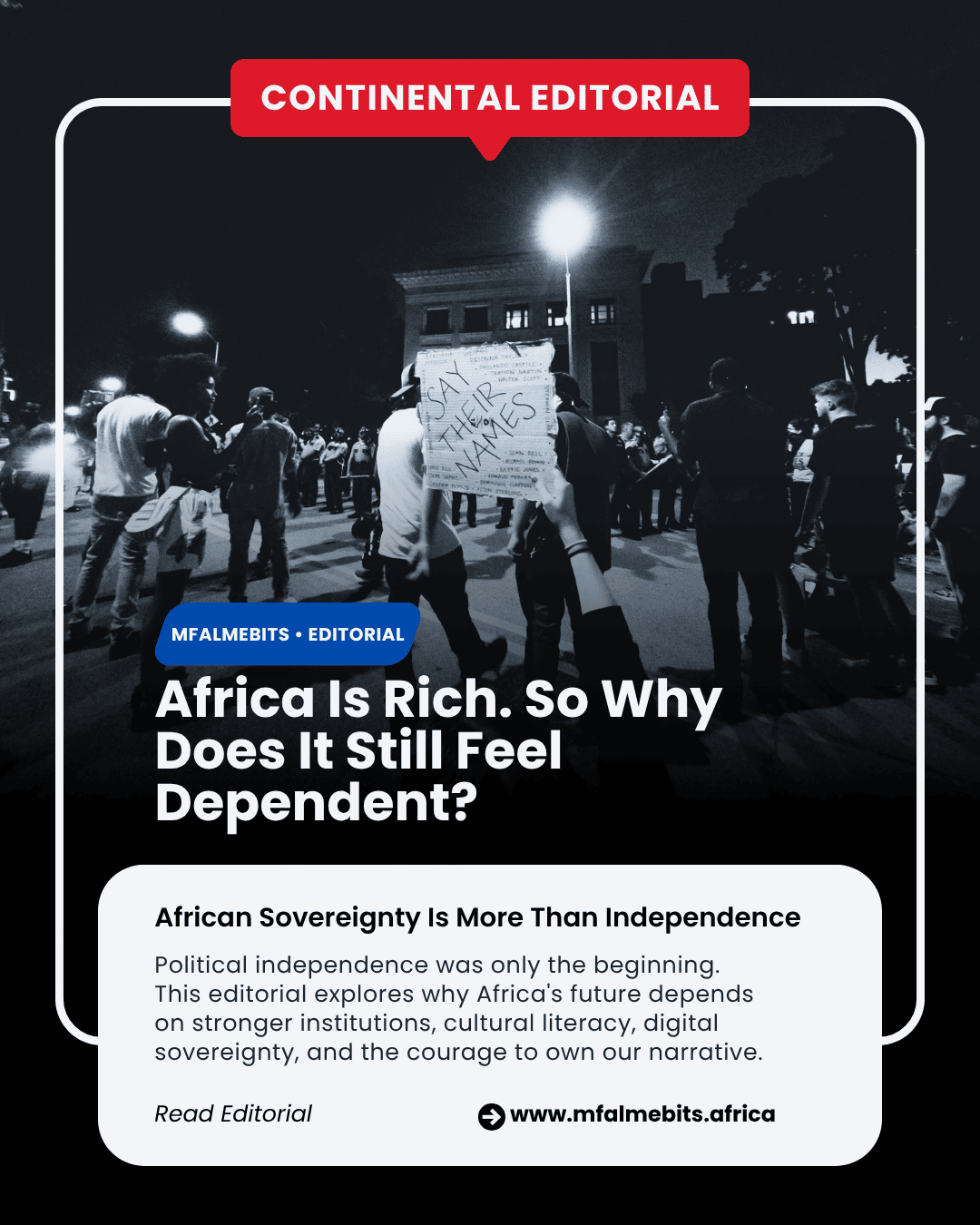
True African sovereignty is measured not only by what we own beneath our soil—but by what we build above it.
No comments yet. Be the first to share your thoughts!